
HCP Clearance | rProteins
Designed to control complex antibody and recombinant protein impurity profiles
without compromising recovery, product quality or process robustness
HCP Species mapped across
CHO feeds
Captured by ChromaGenix
resin
HCP LOG REDUCTION
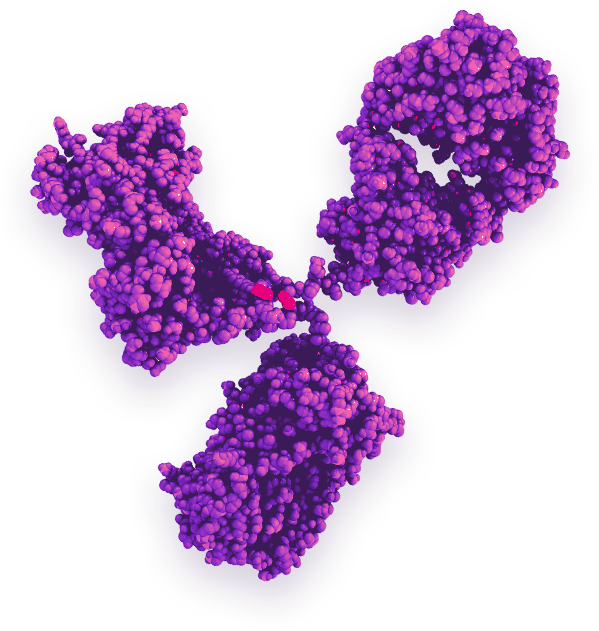
The HCPs that matter most are often the hardest to remove.
Protein A capture and established polishing operations can remove substantial bulk HCP burden. Yet specific proteins may continue through the process because they share properties with the target molecule, associate with the product or resist broad physicochemical separation.
These residual species may represent only a small proportion of total HCP while creating disproportionate concerns around:
- product stability and degradation
- process consistency
- batch-to-batch variability
- impurity-control confidence
- downstream development burden
Understanding which HCPs remain, why they persist and how consistently they are controlled provides a stronger basis for downstream process decisions.
Higher titers changed the impurity landscape: HCP clearance is the new bottleneck
Downstream purification must now contend with a more diverse and abundant HCP population, persistent species that co-purify with product, and a regulatory environment that demands both lower total HCP and specific clearance data for high-risk proteins.
01
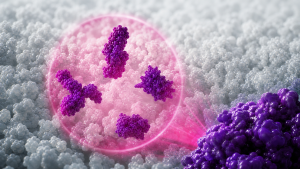
Bulk HCP Reduction Is No Longer Sufficient
02
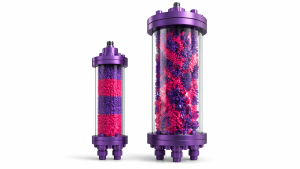
Polishing Step Inconsistency at Scale
03

Yield–Purity Trade-offs Remain Unresolved
04
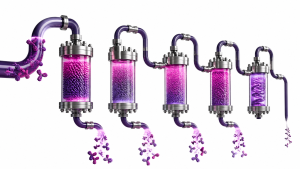
Multi-Step Workflows Drive Up Cost and Risk
A Purpose-Designed Impurity Control Resin
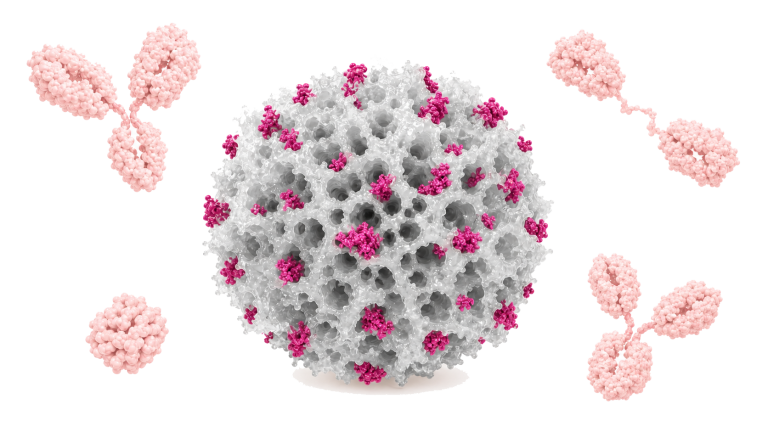
ChromaGenix goes beyond bulk impurity reduction by targeting persistent and high-risk HCP subsets while preserving product recovery and ease of fit into established downstream workflows.
Target the HCPs That Matter
Move beyond total HCP reduction toward selective removal of persistent, product-associated and process-relevant species identified through proteomics.
Preserve Valuable Product
True flow-through operation: the target mAb passes through unbound while persistent HCPs are selectively retained. No elution step, no yield penalty.
Selectivity Beyond Charge-Based Polishing
Our ligand ensemble targets the full spectrum of molecular weight, isoelectric point, and hydrophobicity, removing HCP populations that evade conventional charge-based polishing.
Platform-Ready Robustness
Improve clearance consistency, reduce polishing burden and support more robust purification for diverse antibody and recombinant protein feeds.

Solving the Persistent HCP Challenge in rProtein Purification
This application falls under our NAVIGATE program, connecting you with process expertise, new purification technologies, new insights and collabration opportunities to shape and implement a GMP-ready solution.

Professor Stefano Menegatti
NORTH CAROLINA STATE UNIVERSITY | CHROMAGENIX
Get in touch with us today.
Whether you’re exploring purification solutions, have a technical question, or want to learn more about our technologies, we’re here to help. Complete the form and a member of our team will be in touch shortly.