Cycles Resin Lifetime Demonstrated 0.5 M NaOH CIP with maintained HCP clearance and AAV recovery
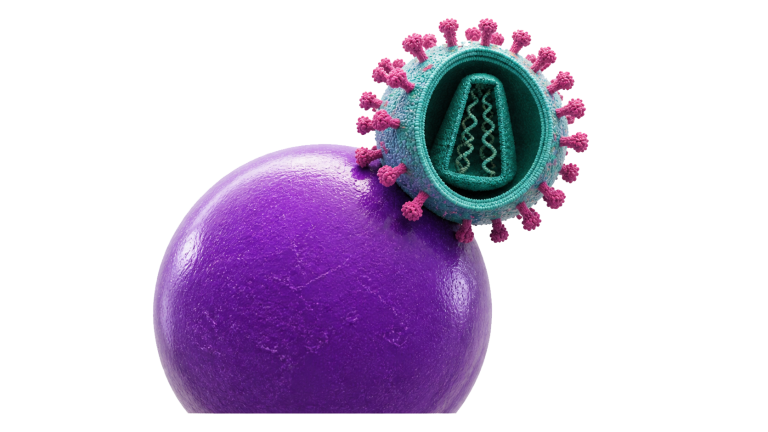
VSV-G + Cocal
Cross-Pseudotype Capture Single platform, no pseudotype-specific re-optimization required
LVV purification must preserve function, not simply recover particles.
Physical particle recovery alone does not establish that a purification step has preserved a useful product.
Envelope, particle structure and biological function are all affected by pH, conductivity, residence time, shear, surface interaction, concentration and hold conditions. A workflow that looks effective by physical titer can still lose infectious or transducing activity.
A purpose-designed affinity approach therefore pairs selective purification with conditions and material formats chosen around functional vector recovery.These impurities may affect multiple stages of the downstream workflow:
What the Lentiviral Purification Field Has Not Yet Answered
Several fundamental questions remain unresolved in lentiviral vector downstream processing. The answers to these problems determine the path towards a scalable, platform-compatible purification solution.
01
The in vivo shift raises the purification bar
As lentiviral programs move from ex vivo cell therapy toward in vivo delivery, expectations for purity, scalability and regulatory control rise sharply — and current workflows were not designed to meet that bar.
02
Particle fragility constrains the capture format
Enveloped LVV particles are sensitive to residence time and shear. Extended contact in a packed resin bed can compromise infectivity, making capture-format selection a core process-design constraint.
03
Pseudotype diversity fragments the workflow
The range of envelope pseudotypes introduces biophysical variability analogous to AAV serotypes, driving pseudotype-specific re-optimization and standing in the way of a single platform approach.
04
Legacy workflows do not scale cleanly
Ultracentrifugation, TFF and multi-step ion exchange were built for clinical-scale supply; adapting them to commercial volumes adds cost, complexity and yield pressure.
A purpose-designed approach to lentiviral purification
A useful LVV purification technology must improve selectivity and scalability while preserving the biological function that determines vector performance.
Evaluate performance through infectious or transducing recovery, supported by appropriate particle, integrity and potency-related measurements.
Reduce pseudotype-specific redevelopment
Explore whether relevant envelope pseudotypes can begin from a more transferable framework, without assuming identical behaviour or eliminating process optimization.
Match the format to the particle
Select resin, membrane or alternative architectures according to mass transfer, residence time, throughput, pressure and vector-sensitivity requirements.
Support scale and process transfer
Build the approach around reproducibility, impurity clearance, cleaning strategy, analytical control and practical transfer into larger-scale manufacturing.
Preparing LVV Purification for the In Vivo Era
This application falls under our NAVIGATE program, connecting you with process expertise, new purification technologies, new insights and collabration opportunities to shape and implement a GMP-ready solution.
Whether you’re exploring purification solutions, have a technical question, or want to learn more about our technologies, we’re here to help. Complete the form and a member of our team will be in touch shortly.
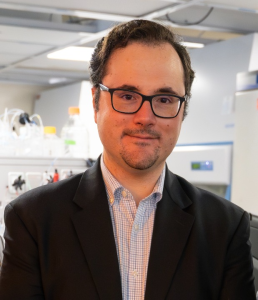
Chris is responsible for identifying investment opportunities, assessing strategic fit within the portfolio, and supporting growth-related operational initiatives. A serial entrepreneur with over 20 years of bioprocessing experience, he has deep expertise across upstream and downstream technologies. Prior to BioProcess360, he founded and led the Purolite Bioprocessing division, growing it from zero revenue in 2015 to $80M in six years. The business was acquired by Ecolab (NYSE: ECL) in 2021 for $3.7BN. Earlier, Chris helped pioneer single-use technology at WAVE Bioreactors, later acquired by GE Healthcare (now Cytiva), and held senior roles at GE and Merck Millipore. He holds an MSc in Biotechnology and attended Harvard Business School. Outside work, Chris enjoys biking, paddleboarding, live music, and spending time with his two daughters.